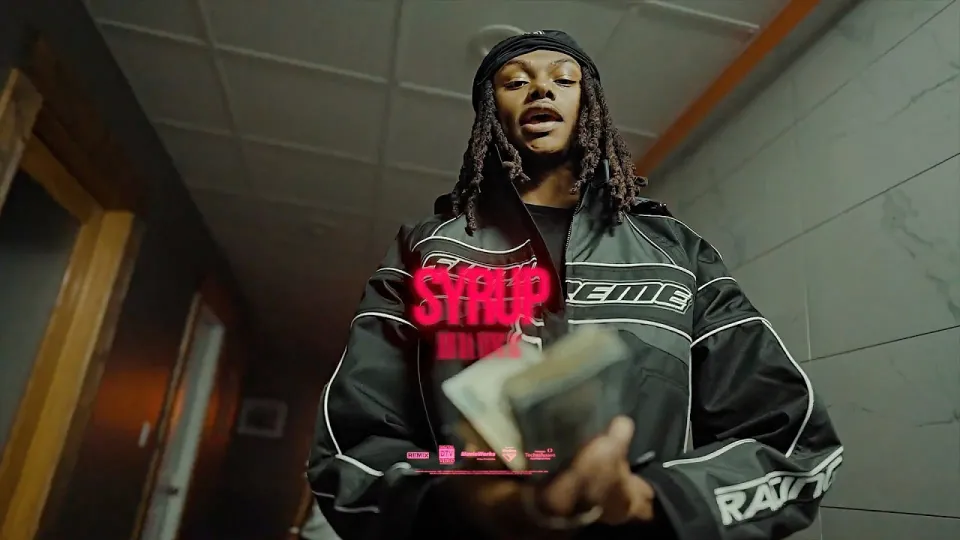
What makes a Detroit beat like "Syrup" work for Rio Da Yung OG and Babyfxce E?
Want articles like this for your own video to promote it on YouTube and Google? Order them through the Telegram bot @sat_sit_bot. The bot writes and publishes the articles itself (with your YouTube video embedded) on popular topical websites (no ads). Free trial — 50 articles.
· based on the channel Reuel StopPlaying
Key takeaways
- "Syrup" is a free Rio Da Yung OG x Babyfxce E type beat published by Reuel StopPlaying on 7 March 2026.
- Free use covers non-profit demos, streaming showcases and live non-profit shows; any for-profit use needs a paid non-exclusive or exclusive license.
- Every use requires the written credit "Produced by (Producer Name) for SoundFirst Productions" in the video description or packaging.
- A commercial license for the beat is sold through https://bit.ly/2mxSONh.
- The beat's most discussed element is a pitched, canned-sounding vocal sample that listeners keep calling the "canned milk".
A Detroit beat is a sparse, sample-driven instrumental built for dense, punchline-heavy rapping, and "Syrup" by Reuel StopPlaying is a working example of that template aimed at Rio Da Yung OG and Babyfxce E. The track is a free type beat: you can download it and record on it at no cost for non-profit use, while any commercial release requires a paid license, which you can buy through the beat's purchase page. Everything else — the sample choice, the credit rule, the mixing approach — follows from that split between free promotion and paid release.
What a Detroit type beat actually is
A Detroit type beat is an instrumental that copies the production grammar of Michigan rap: hard, dry drums, a short loop repeated with small variations, and lots of empty space so the vocal sits forward. The style grew out of Flint and Detroit scenes around artists such as Rio Da Yung Og, Babyfxce E, Krispylife Kidd, Grindhard E, RMC Mike, BabyTron and YSR Gramz, and producers now tag beats with those names so rappers searching for a similar sound can find them.
The practical consequences for a producer are simple:
- Keep the loop short — two or four bars is enough when the rapper delivers long, continuous verses.
- Leave the low end clean; 808s and kicks carry the track while the melody stays thin.
- Use one distinctive sample as the hook, not a full chord progression.
- Avoid crowded arrangements: the beat should survive being rapped over for two and a half minutes straight.
"Syrup" follows that logic. Its identity comes from a single pitched vocal phrase rather than from layered instrumentation, which is exactly why listeners react to it in the first seconds.
The sample everyone is talking about
"Syrup" is built around a chopped, pitched-up vocal that sounds like a canned or processed voice, and that one decision drives most of the reaction. Commenters on the upload keep returning to the same point — that the sample is impossible to take entirely seriously and still hits hard — and several of them describe it as a "canned milk" sound. That is not a flaw in the beat; it is the hook.
Detroit and Flint instrumentals often work this way: a strange, almost comic vocal fragment becomes the most memorable part of the record, and the rapper's job is to play against it. When a sample is deliberately odd, the verse can be deadpan, threatening or funny without the track fighting it. If you are producing in this lane, the lesson is to commit to one weird element and build nothing else around it.
Free license rules you have to follow
The download is free, but the permission is narrow, and getting it wrong can cost you a release. Reuel StopPlaying's terms allow free beats for non-profitable, promotional or personal use only: free demos, promo CDs, streaming a song on YouTube or Facebook, and live shows that do not generate profit. For-profit use is explicitly forbidden under the free download.
Credit is mandatory. On every physical or digital distribution — and in the description of any streaming upload — you must write: "Produced by (Producer Name) for SoundFirst Productions". Where written credit is genuinely impossible, a recorded vocal credit is required instead. The producer also reserves the right to change the policy, so check the current terms before you publish.
If you want to sell the song, put it on paid streaming with monetization, or press physical copies for profit, you need a non-exclusive or exclusive license. The purchase link for "Syrup" is https://bit.ly/2mxSONh, and licensing questions go to doyourbizz@gmail.com.
How to record a verse on "Syrup"
Rapping on a Detroit type beat is a delivery problem more than a writing problem, because the beat leaves you nowhere to hide. Start by looping the beat and freestyling in long takes rather than writing sixteen separate bars; Michigan-style verses reward momentum and internal rhyme over tidy four-bar structures.
A workable process:
- Count the loop and mark where the sample phrase lands, then avoid placing your punchlines directly on top of it.
- Record a full pass without stopping, then a second pass, and keep the better ad-libs from each.
- Double only the end-of-line words, not whole verses — the dry vocal is the point.
- Keep the beat's high end intact when mixing; if you boost the vocal too brightly, the sample stops cutting through.
- Print a version with the producer credit already written into the file name so you do not lose it later.
Beginners often reach for a free DAW and a phone microphone, which is fine for a demo — the license covers exactly that kind of non-profit recording. What matters is that the vocal is loud, close and uncluttered.
Common questions from listeners and rappers
Most of the debate around "Syrup" is not about the drums but about whether the sample is serious. Some listeners find the pitched vocal funny on first listen and hard by the third; others immediately ask who they would need to credit or whether they can sell a song built on a free download. The answer to the second question is no — a free beat stays non-profit until a license is bought.
A second recurring theme is imitation. Several commenters joke about recreating the sound themselves in a browser-based DAW, and that is a legitimate exercise: rebuild the drum pattern, find any short vocal fragment, pitch it up, and you will learn more about Detroit arrangement than from any tutorial. Just do not upload the result as your own original production if it is a straight copy of someone's beat.
A third theme is the producer tag. Listeners notice it, and that is intentional — a recognizable tag protects the beat when it travels across uploads and re-uploads.
Where to find more from the same producer
Reuel StopPlaying publishes free type beats in this lane regularly, and the fastest way to follow new drops is the producer's own channels: https://twitter.com/reuelethan and http://instagram.com/Reuelethan. Beats are also listed for purchase through https://bit.ly/2mxSONh, which is the same page to use if you want to upgrade a free demo into a licensed release.
If you are searching for adjacent sounds, the tag vocabulary tells you what to type: Flint type beat, Babyfxce E type beat, Rio Da Yung OG type beat, Krispylife Kidd type beat, Grindhard E type beat, RMC Mike type beat, AK Bandamont type beat, BabyTron type beat, YSR Gramz type beat. Searching those phrases will surface instrumentals with the same drum language and the same short-loop structure.
Final word on the "Syrup" beat
"Syrup" is a clean demonstration of how little a Detroit beat needs: one strange pitched sample, dry drums, and space for a rapper who never stops moving. The free download is genuinely useful for demos and streaming showcases, but the credit line and the non-profit limit are not optional, and a commercial release requires a license. If the sample is what pulled you in, treat that as the production lesson rather than an accident. This breakdown was put together by the channel Reuel StopPlaying, which also hosts the beat itself; grab the license or the download at https://bit.ly/2mxSONh before you record.
Questions & answers
Can I sell a song recorded over the "Syrup" beat?
Not under the free download. Free beats from Reuel StopPlaying are limited to non-profitable, promotional and personal use, and for-profit use is explicitly forbidden. To sell the song, monetize it on streaming platforms or press copies for profit, you must buy a non-exclusive or exclusive license through https://bit.ly/2mxSONh.
What credit do I have to write when I use the beat?
You must include the line "Produced by (Producer Name) for SoundFirst Productions" on every physical or digital release and in the description of any streaming upload. If written credit is truly impossible in a given format, a recorded vocal credit is required instead.
Why does the sample sound like a canned or processed voice?
The beat is built on a short pitched vocal fragment rather than a melodic loop, and that processing is what gives it its character. Listeners often find it funny at first and then hard on repeat, which is exactly the effect a single odd sample is supposed to produce in this style.
Can I recreate this Detroit beat myself?
Yes, and it is a useful exercise: program dry drums, take any short vocal phrase, pitch it up and chop it into a two- or four-bar loop. Rebuilding the arrangement teaches you how little a Detroit type beat needs. Just avoid uploading a straight copy of an existing beat as your own original production.
Source: [FREE] Rio Da Yung OG x Babyfxce E Type Beat - “Syrup” | Detroit Type Beat · Markdown version